Cuéntamo Blog

Accounting tips for freelancers and households

Cuéntamo Blog

Modelo 303: what it is, who files it, and how to fill it in step by step

May 8, 2026

The modelo 303 is the quarterly VAT self-assessment that every autónomo (self-employed worker) with VAT-liable activity has to file, and out of its sixty-plus boxes, most of them will never affect you. The real worry usually isn’t “what is it”, but what happens if you get something wrong: a wrong box is fixed with a supplementary return, and the sooner you file it, the less it costs — see what happens if you file late. And if the result comes out negative, that balance isn’t lost: it carries over to the next quarter, as we cover in VAT to offset from previous quarters.


Cuéntamo Blog

How your investments are taxed in Spain: a practical IRPF guide

May 6, 2026

One of the questions that comes up most when someone starts investing is: and how do I declare this? The short answer is that the Spanish Tax Agency (Agencia Tributaria) wants its share of what you earn by investing. The long answer is that the system has its nuances, and knowing them can save you quite a bit of money.

This article explains in a practical way how the main investment products are taxed in Spain, without beating around the bush and without claiming to replace a tax adviser.

Cuéntamo Blog

How to Start Investing from Scratch (Even If You Know Nothing About the Stock Market)

May 3, 2026

Investing feels a little daunting at first. Some people put it off for years because it seems too complicated, too risky, or too much of a “rich person’s game”. Meanwhile, their money has been quietly losing purchasing power sitting in a current account.

This article is for that person. No unnecessary jargon, no promises of magical returns, and no hidden sales pitch.


Why invest if I already have savings?

Because money sitting idle in a current account loses value over time. If inflation runs at 3% a year and your savings earn nothing, in ten years your purchasing power will have dropped significantly, even though the number in your account stays the same.

Cuéntamo Blog

Deductible expenses for the self-employed under simplified direct assessment: the complete list (2026)

April 30, 2026

One of the advantages of being self-employed (autónomo) compared with an employee is that you can deduct the expenses necessary to carry out your activity before being taxed. That reduces the taxable base and, therefore, what you pay in IRPF (Spanish personal income tax).

But “expenses necessary for the activity” has a specific definition in tax law, and not everything that might seem deductible actually is. This guide gathers the most common deductible expenses under simplified direct assessment (estimación directa simplificada), with the nuances worth knowing.

Cuéntamo Blog

How to Tell if a Savings Account Really Delivers What It Promises: Understanding APY vs. Nominal Interest

April 30, 2026

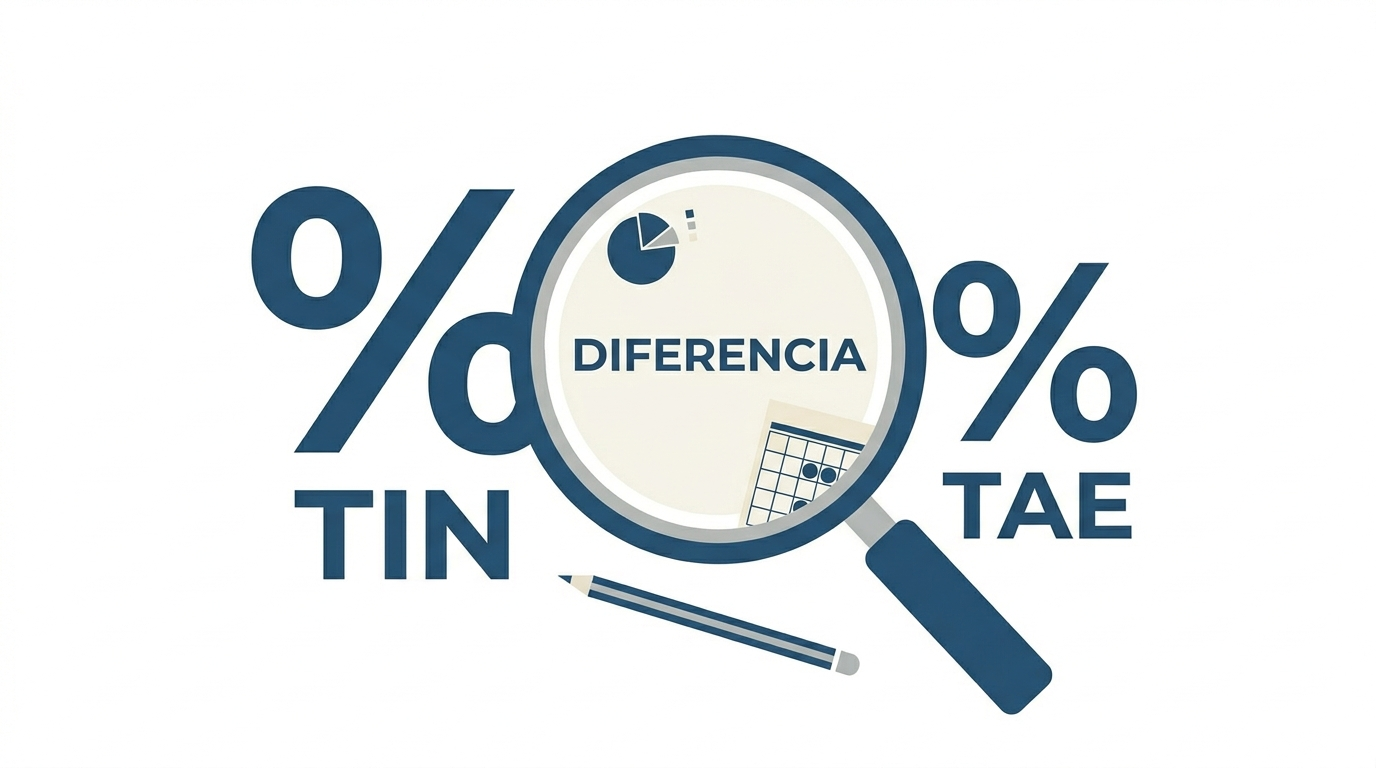
When a bank advertises a savings account at “4% interest,” that 4% is almost never what you actually earn on your money over a year. Or rather: it depends on what kind of interest rate that 4% is.

The confusion between the nominal interest rate and the annual percentage yield (APY) is one of the most common pitfalls in personal finance, and the one banks exploit the most in their advertising. Understanding the difference doesn’t require an economics degree; it just takes someone explaining it clearly once.

Cuéntamo Blog

Quarterly IRPF for the self-employed: what modelo 130 is and when you don't have to file it

April 30, 2026

Modelo 130 (the quarterly IRPF prepayment) is the second big quarterly form for the self-employed, alongside the modelo 303 for IVA. Unlike IVA (the Spanish VAT), which you settle on behalf of the State, modelo 130 is a payment on account of your own annual tax: the IRPF (Spanish personal income tax).

The most common confusion is thinking it’s an additional tax. It isn’t. It’s an advance on the IRPF you would pay anyway in your annual tax return. The difference is that, instead of paying everything in June of the following year, you pay it in four instalments throughout the year.

Cuéntamo Blog

How to manage household finances as a couple without it becoming a source of conflict

April 29, 2026

Managing money as a couple is one of those topics many people avoid discussing openly, precisely because it feels awkward. And that awkwardness has a cost: decisions made without shared information, misunderstandings about who pays for what, and a vague feeling that “something doesn’t add up” that nobody quite puts into words.

Money doesn’t have to be a source of conflict in a relationship. It becomes one when there’s no agreed-upon system and each person’s expectations aren’t aligned. When there’s a system both of you understand and accept, it becomes just another topic, no more loaded than deciding who’s doing the grocery shopping this week.

Cuéntamo Blog

Emergency fund: how much do you need and how to calculate it based on your real expenses

April 25, 2026

The emergency fund is one of the most repeated concepts in any personal finance conversation. And for good reason: it’s the first real step toward financial stability, the cushion that turns an unexpected event into an inconvenience rather than a crisis.

The problem is that most explanations out there about emergency funds are too generic. “Save three to six months of expenses” is reasonable advice, but not very helpful if you don’t know exactly how much you spend or what to include in that calculation.

Cuéntamo Blog

What Input and Output VAT Are, Explained Without the Jargon

April 22, 2026

If you’ve just registered as an autónomo (self-employed worker), or you’ve only been one for a short while, there are two terms that come up constantly and that are worth understanding well from the start: IVA soportado (input VAT) and IVA repercutido (output VAT).

They’re not difficult concepts. They’re difficult to understand when they’re explained in technical language before they have any context. With a concrete example, they fall into place on their own.

Cuéntamo Blog

How to Calculate Your Quarterly VAT Without an Accountant

April 18, 2026

The modelo 303 (the quarterly VAT return) is the form you use to declare VAT every quarter. For many autónomos (self-employed workers) it’s the first tax obligation they face, and also the one that causes the most confusion at first. Not because it’s especially complex, but because nobody explains exactly what you need to fill it in or how the calculation works underneath.

The good news is that the calculation itself is simple. The tricky part, if there’s anything tricky at all, is having your data well organized before you sit down to fill it in.