Emergency fund: how much do you need and how to calculate it based on your real expenses
The emergency fund is one of the most repeated concepts in any personal finance conversation. And for good reason: it’s the first real step toward financial stability, the cushion that turns an unexpected event into an inconvenience rather than a crisis.
The problem is that most explanations out there about emergency funds are too generic. “Save three to six months of expenses” is reasonable advice, but not very helpful if you don’t know exactly how much you spend or what to include in that calculation.
What an emergency fund is actually for
Before the math, the definition: an emergency fund is liquid money (accessible in days, not weeks) set aside for unexpected expenses that you can’t or don’t want to finance with debt.
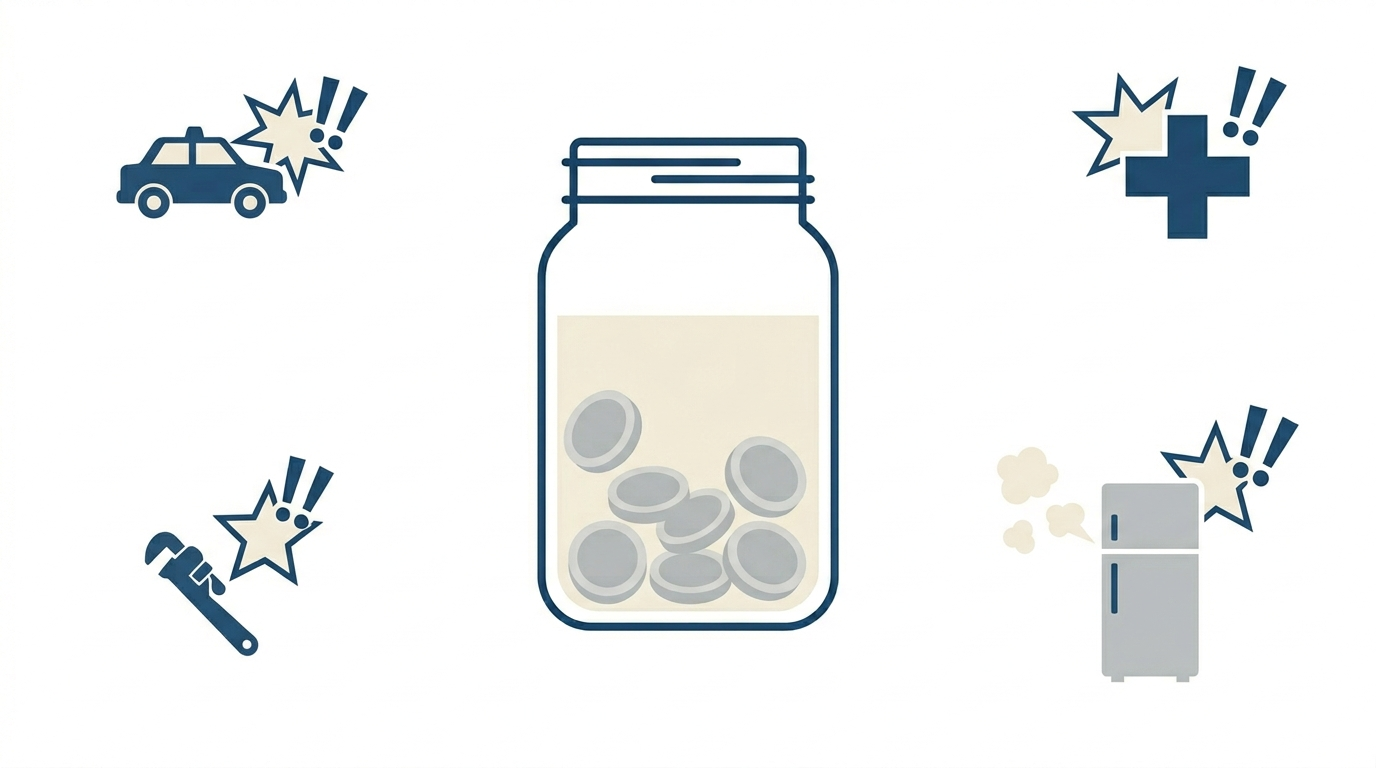
Typical emergencies include: job loss or a sudden drop in income, urgent car or home repairs, medical expenses not covered by insurance, or any other large, unexpected expense that throws your monthly budget off balance.
What’s not an emergency: holidays, an expensive impulse buy, or an expense you could have planned for in advance. Those deserve their own planning.
The denominator: what counts as “your monthly expenses”
“Three to six months of expenses” is the standard rule. But what does “expenses” include?
The most conservative interpretation, and the most useful one, is to calculate the monthly cost of maintaining your basic standard of living if your income disappeared overnight. Not your total current spending, but your subsistence spending: what you need to keep living normally while you sort things out.
That includes:
- Housing (rent or mortgage).
- Utilities (electricity, water, gas, internet).
- Food.
- Essential insurance (health, home).
- Basic transportation.
- Self-employment taxes and social contributions, if applicable.
- Any payment you can’t pause without serious consequences.
It doesn’t include: entertainment, restaurants, non-essential subscriptions, clothing, travel. In a real emergency, those expenses get reduced or eliminated.
The multiplier: three months or six?
The answer depends on your specific situation.
Three months is enough if:
- You have stable, predictable income (a regular salary, long-term contracts).
- Your field is in high demand and finding a new job wouldn’t take more than three months.
- You have other sources of liquidity available at no cost (family, a partner with stable income).
Six months or more is wiser if:
- You’re self-employed or freelancing with variable income.
- You work in a sector with high turnover or uncertainty.
- You live alone with no close financial safety net.
- You have dependents.
- Your industry takes months to find a new opportunity.
Freelancers and self-employed workers, in particular, should aim for six months at a minimum. The variability of income means that periods with no invoicing or low invoicing are more likely, and the emergency fund is what lets you get through them without making rushed decisions.
A very practical way to decide how many months you need is to simulate scenarios. What happens if I lose my main source of income? How does the forecast change? Cuéntamo includes a scenario simulator that lets you disable income or expense recurrents and see in real time how it affects your projected balance and how much you’d need to save to avoid going negative. You can also mark certain income sources as “safe” so the cushion only covers the gap between your expenses and those stable earnings.
The step-by-step calculation
Step 1: List all your current monthly expenses. Not just the ones you remember: use your bank statements from the last three months so you don’t miss any.
Step 2: Identify which ones are non-essential in an emergency and which are not. Be honest: streaming is non-essential. The mortgage isn’t.
Step 3: Add up only the non-negotiable expenses. That’s your monthly emergency spending.
Step 4: Multiply by the number of months you choose as your target (three, six, or whatever you decide).
The result is your emergency fund goal.
Example: essential monthly expenses of 1,800 euros x 6 months = 10,800 euros as a target.
Where to keep your emergency fund
Two basic requirements: liquidity and safety. Emergency fund money is not for investing. It’s not there to grow: it’s there to be available when you need it.
The most common options are:
- A high-yield savings account with no withdrawal penalties.
- A separate current account from the one you use day-to-day (so you don’t confuse it with your everyday spending money).
What doesn’t make sense for an emergency fund: investment funds, fixed-term deposits with penalties, cryptocurrencies, or any asset with a risk of capital loss or difficulty liquidating quickly.
A modest return with immediate access is better than a high return with penalties or risk. For money that exceeds the cushion, other alternatives make more sense.
How to build it if you’re starting from zero
Building a six-month fund from scratch can feel impossible. The key is not to see it as a single goal, but as a series of milestones.
First milestone: 1,000 euros. This is the first real cushion, the one that keeps a small unexpected expense (a breakdown, a fine, a medical bill) from forcing you to reach for your credit card.
Second milestone: one month of essential expenses. This already gives you breathing room for a short income interruption.
Final goal: three or six months, depending on your situation.
The most effective way to build it is to automate your savings: a standing order to the fund account on payday, before that money is available to spend. It’s not discipline: it’s architecture.
When to use the fund (and when not to)
The emergency fund exists for real emergencies. Using it for plannable expenses (even big ones) is a mistake many people make.
If you know your car insurance and service are due in October, that’s not an emergency: it’s a predictable expense that should have its own reserve fund or be spread across your monthly budget over twelve months.
The emergency fund is for what you can’t foresee. If you use it for what you can foresee, the real emergency comes along and the fund isn’t there.
And if you do use it, replenish it. An emergency fund that’s been spent and not rebuilt is an insurance policy that expired.
How does Cuéntamo help with this?
The first step toward an emergency fund is knowing how much you actually spend each month. With your transactions in Cuéntamo you have that figure without digging through your statements: you record your income and expenses, classify them by category, and see the monthly summary at a glance. That’s the real number you have to multiply by three or six.
From there you can create a savings goal for the fund: you set how much you want to accumulate, schedule an automatic monthly contribution, and Cuéntamo tracks the progress toward the target. It’s how you turn “I’ll save whatever’s left over” into a fixed amount you set aside every month, which is the only approach that actually works.
And because your recurring items feed the balance forecast, you know in advance whether some month will be tight and you should ease off, or, conversely, whether you have room to speed up the cushion. Once it’s in place, the next step is deciding what to do with the money beyond the fund: we cover that in how to start investing.
Frequently asked questions
How many months of expenses should an emergency fund cover?
Between three and six months of your essential expenses, depending on your situation. Three is enough if you have stable income that’s easy to replace; six or more is the prudent choice if you’re self-employed, live alone, or have dependents.
Which expenses do I include when calculating my emergency fund?
Only the subsistence expenses you can’t pause: housing, utilities, food, essential insurance, basic transportation, and your self-employment contribution if applicable. Entertainment, travel, and non-essential subscriptions don’t count.
Where is it best to keep an emergency fund?
Somewhere liquid and safe: a high-yield savings account with no withdrawal penalty, or a current account kept separate from your day-to-day one. This is not money for investing or for deposits with penalties.
Can I use the emergency fund for big expenses I already know are coming?
No. Car insurance or a scheduled service are predictable expenses, not emergencies: they belong in your budget or in a separate reserve fund. The emergency fund is only for the unforeseen, and if you use it, replenish it.
How do I start an emergency fund if I’m starting from zero?
By milestones: first 1,000 euros, then one month of essential expenses, and finally your target of three or six months. The most effective approach is to automate a transfer on payday, before you can spend that money.
This article is checked against official sources and reviewed periodically. If you spot anything out of date, email us at [email protected].