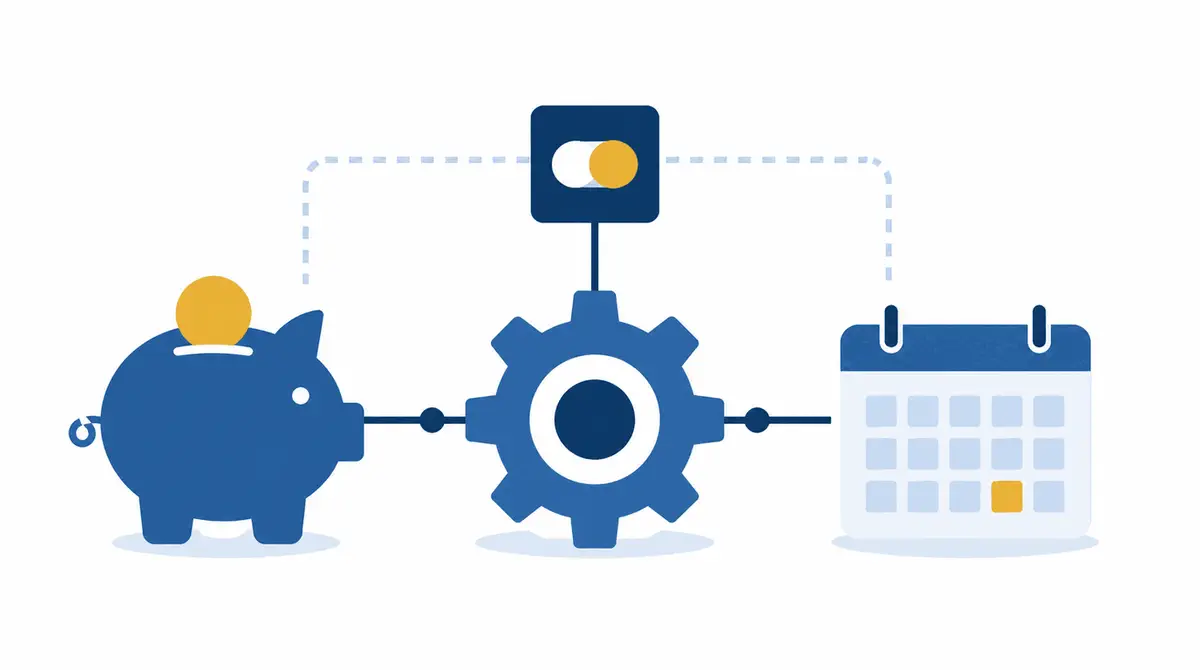
Automate it so it doesn't depend on willpower
You decide to save more, stop impulse buying, or never pay a bill late again. It works for two weeks. Then a rough month shows up, you let your guard down for one day, and the resolution quietly fades without you ever deciding to give up. It’s not that you lack willpower: you’re using it on the wrong job.
The tip: let the system decide, not you every time
Willpower is a resource that runs out. Every decision you have to make again — do I set money aside this month? do I pay this bill now or later? do I buy this or not? — is a chance for the easy path to win. An automatic system never gives you that chance: the decision is already made once, and it runs on its own whether you remember or not, whether you’re having a good day or a terrible one.
The practical rule is simple: if something has to happen every month (or every week), don’t rely on remembering. Schedule it. Save your willpower for decisions that are genuinely new each time, not for repeating the same move thirty times a year.
An example with numbers
Picture two people who want to save €100 a month. The first tries to do it “by hand”: whenever there’s something left over at month-end, they set it aside manually. Because it means deciding again every time, in practice they manage it about 5 months out of 12 — the calm ones — and forget or find it inconvenient the rest of the time. Result after a year: around €500, if they’re lucky.
The second schedules an automatic transfer of €100 the day they get paid, into an account they don’t check daily. They don’t have to remember or decide anything: the bank does it for them all 12 months. Result after a year: €1,200, well over double, without ever having had to be more disciplined at any point. The difference isn’t in either person’s character: it’s that one decision made a single time beat twelve decisions that had to be made every month.
How to apply it today
You don’t need to automate everything at once. Start with whatever you resist most and keep adding from there:
- Savings, with a scheduled transfer on payday (we cover this in more detail in pay yourself first).
- The bills you pay by hand: setting up direct debit for electricity, rent, or subscriptions instead of paying “whenever you remember” removes the risk of a late fee that has nothing to do with poor management, just forgetfulness.
- Whatever you cancel, redirect it the same day: if you cancel a subscription you no longer use, schedule that same amount toward savings before it “dissolves” back into your normal monthly spending.
- Tracking your money: if you have to sit down and log every expense by hand to know where you stand, that’s one more daily decision to depend on. An app that records your transactions and shows you where your balance is headed does that job without you having to remember to open it every night.
The common thread is the same in all four cases: the fewer times you have to decide “do I do this today?”, the fewer times “I’ll do it tomorrow” gets to win.
How does Cuéntamo help with this?
Cuéntamo doesn’t replace the standing orders you set up with your bank, but it does take over the part that did depend on you: logging and reviewing. It records your transactions, shows you a balance forecast based on what’s already scheduled, and warns you if a month is going to fall short before it happens, without you having to keep track by hand every week. Mark your bills as recurring and you stop having to remember when each one is due, too.
And if the reason you keep abandoning every budget attempt is that it depends on you updating it manually, the underlying problem is the same one covered here: read why you keep quitting budgeting apps for the full picture.
You can try it for free at cuentamo.com.
Frequently asked questions
What if I automate the wrong amount and end up short for something important?
Start with small amounts and review them every few months, not every week. The goal isn’t to automate blindly forever — it’s to stop depending on remembering every time. Adjusting the figure two or three times a year is still far less effort than deciding twelve times.
Isn’t it easier to just be more disciplined about it?
You can try, but the track record of any January resolution says it usually doesn’t last. An automatic system doesn’t need you to have a good day: it keeps working exactly the same on the day you’re tired, busy, or in a bad mood, which is exactly when discipline tends to fail.
Where do I start if I want to automate several things at once?
With just one — whichever costs you the most effort today. Once that automation has been running on its own for a couple of months and you’ve stopped thinking about it, add the next one. Automating five things at once turns into, once again, one big decision you can put off.
This article is checked against official sources and reviewed periodically. If you spot something outdated, write to us at [email protected].