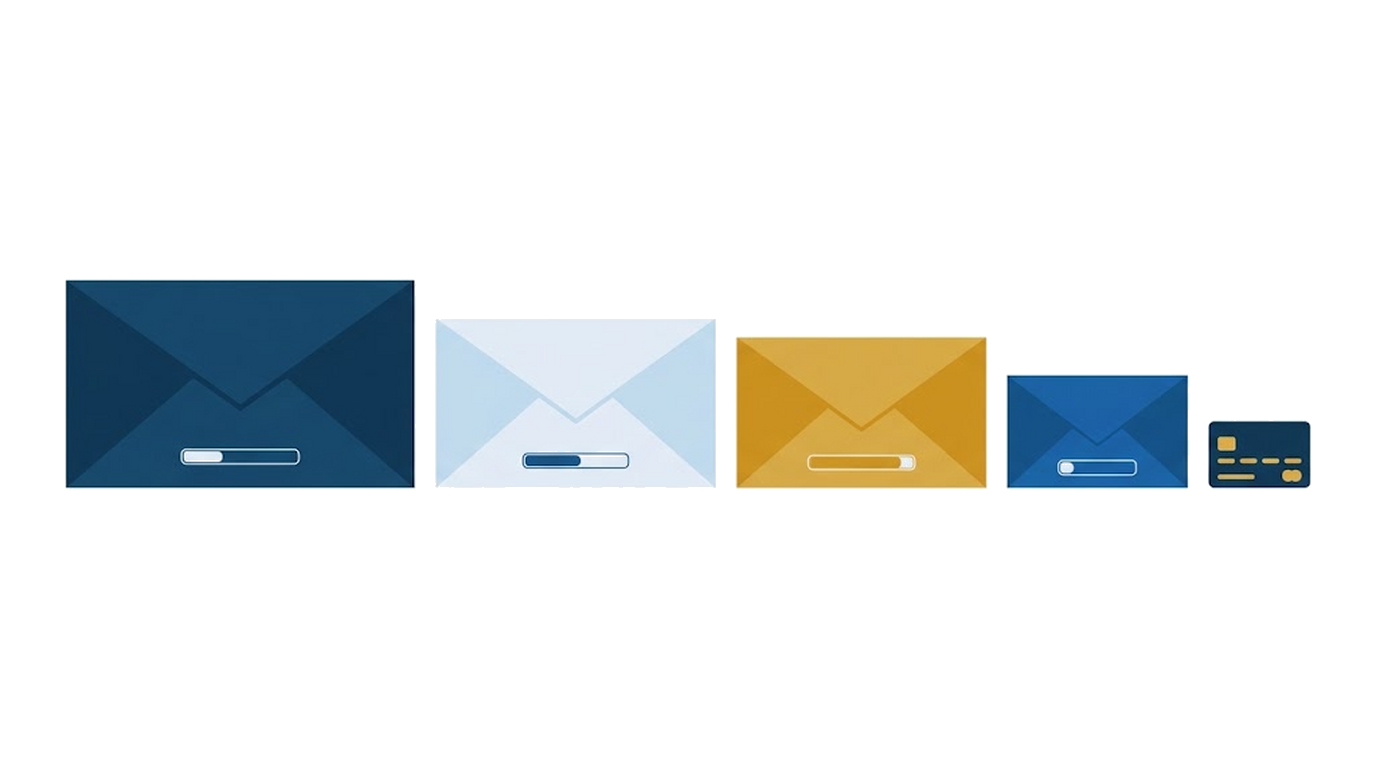
The envelope method, in digital form
You have €750 free to spend this month, according to your account. But that figure is a useful lie: mixed in there is Saturday’s dinner out, the clothes you need for the season change, and your sister’s birthday present. If you spend €400 going out in the first two weeks, you don’t notice until it’s time to buy the present and there’s nothing left. The overall number never warns you in time.
The tip: the limit has to exist before you spend, not after
The envelope method is old and worked beautifully with cash: you’d put a fixed amount in a paper envelope for each category (going out, clothes, gifts), and once an envelope ran dry, spending in that category stopped until the following month. No willpower required, nothing to track: the limit was physical.
Almost nobody pays in cash today, so the paper envelope no longer works, but the idea that made it work is still valid: the limit has to exist before you spend, not show up afterwards in a spreadsheet. The digital version recreates that scarcity with tools you already have at hand:
- Sub-accounts or “pots” inside your bank or app. Most banks and neobanks let you create several free accounts or “pockets”, each with its own name. One per envelope.
- A prepaid card topped up each month with the total for one specific envelope (say, going out), if you’d rather keep using a physical card without having to mentally track a balance.
- Spending-limit categories in a budgeting app, if you don’t want to move real money between accounts: the effect is the same as long as you force yourself to check the limit before paying, not at the end of the month.
Pick only 3 to 5 envelopes, and only for the categories where money genuinely slips away. You don’t need one for every line item at the supermarket: the method is for discretionary spending, the kind you decide, not for the fixed costs you already know are coming.
An example with numbers
Let’s stick with those €750 free per month, after setting aside fixed costs and savings (we explain how to get to that figure in the three-account system). Instead of leaving it all together, you split it into envelopes:
- Going out and restaurants: €250.
- Clothes: €150.
- Gifts: €100.
- Small unexpected costs (a repair, a treat): €150.
- Unassigned, free margin: €100.
By the 18th of the month, the going-out envelope is down to €20. Without envelopes, your account would still show a comfortable cushion, and you’d keep going out for dinner without thinking twice. With the envelope in front of you, the decision is explicit: keep spending on going out knowing you’re taking it from somewhere else, or wait until next month. The overall balance would never have warned you; the envelope does.
How to apply it today
- Write down your last two months of discretionary spending by category, even roughly. You don’t need precision, just a sense of where the money quietly goes.
- Pick 3 to 5 categories, the ones that get out of hand most often. Leave out fixed costs: those already live in their own account if you’re following the three-account system.
- Open the sub-accounts or turn on the spending-limit categories the same day you get paid, and move to each one the amount you’ve decided, not whatever’s left over at month’s end.
- When an envelope runs dry, stop. If you need to move money from another envelope, do it consciously and note it down, not quietly: the whole point of the method is that overspending stays visible, not that it becomes impossible.
How does Cuéntamo help with this?
Cuéntamo’s Budgets are envelopes without moving a single euro. You create one per category (Going out, Clothes, Gifts) with its monthly amount, and every expense you log or import in that category draws it down. The bar turns amber at 80% (you choose the threshold) and red when you go over.
Above the list you see how much is left to assign: what came in this month minus what you’ve already split into envelopes. If the going-out envelope runs short on the 18th, Move money shifts an amount over from another budget, and the transfer stays visible in both. And if you turn on rollover, whatever you don’t spend in an envelope carries over to next month, just like the notes left in a paper envelope.
Prefer the version with real money kept apart? Add each bank sub-account as its own account and see its balance next to the total.
Careful, though: this is not budgeting every euro. We’ve already covered why you quit every budgeting app: running envelopes for everything means logging, reviewing and readjusting every month, and three weeks in it wears you out. With three to five envelopes, only where money slips away, the method is a scalpel, not a perpetual diet. For everything else (fixed costs, the bills coming up), the useful question is still how much money you’re going to have, and that’s what a balance forecast answers.
You can try it for free at cuentamo.com.
Frequently asked questions
Do I have to open lots of bank accounts to do this?
Not necessarily. You can recreate the same effect with categories or tags inside a budgeting app, as long as you check them before paying and not only when reviewing the month. Sub-accounts help because they make the limit more physical, but they’re not required.
Which categories should I pick for the envelopes?
The ones that get out of hand, not all of them. If you never run short on clothes but always fall short on going out or gifts, put the envelope right there. Three or four well-chosen envelopes work better than ten you don’t actually watch.
My going-out envelope runs out halfway through the month. What do I do?
That’s exactly the decision the method forces you to make consciously: wait until next month, or move money from another envelope knowing that one will come up shorter. What the envelope prevents is that transfer happening without you noticing.
Does this replace my emergency fund?
No, they’re different things. Envelopes organise your discretionary spending for the month; your emergency fund is the separate cushion for big unexpected events (an expensive repair, going months without income), and it shouldn’t be tapped to top up an envelope that ran out because of one extra dinner.
This article is checked against official sources and reviewed periodically. If you spot something outdated, write to us at [email protected].