Freelancers

Freelancers

Deducting the car, the phone and the home as a freelancer: what the tax office accepts (and what it doesn't)

August 25, 2026

Some freelance expenses raise no doubt at all: office supplies, the software you use every day, your accountant. Then there are the car, the phone and the home, which happen to be the things you use for everything: for work and for life. That’s where almost every freelancer hesitates, and where the two opposite mistakes happen: deducting nothing out of fear, or deducting too much without realizing you’re taking on a real risk.

freelancers deductible expenses freelancer car freelancer phone home office income tax
Freelancers

How to pay yourself a salary as a freelancer (without spending the tax money)

August 19, 2026

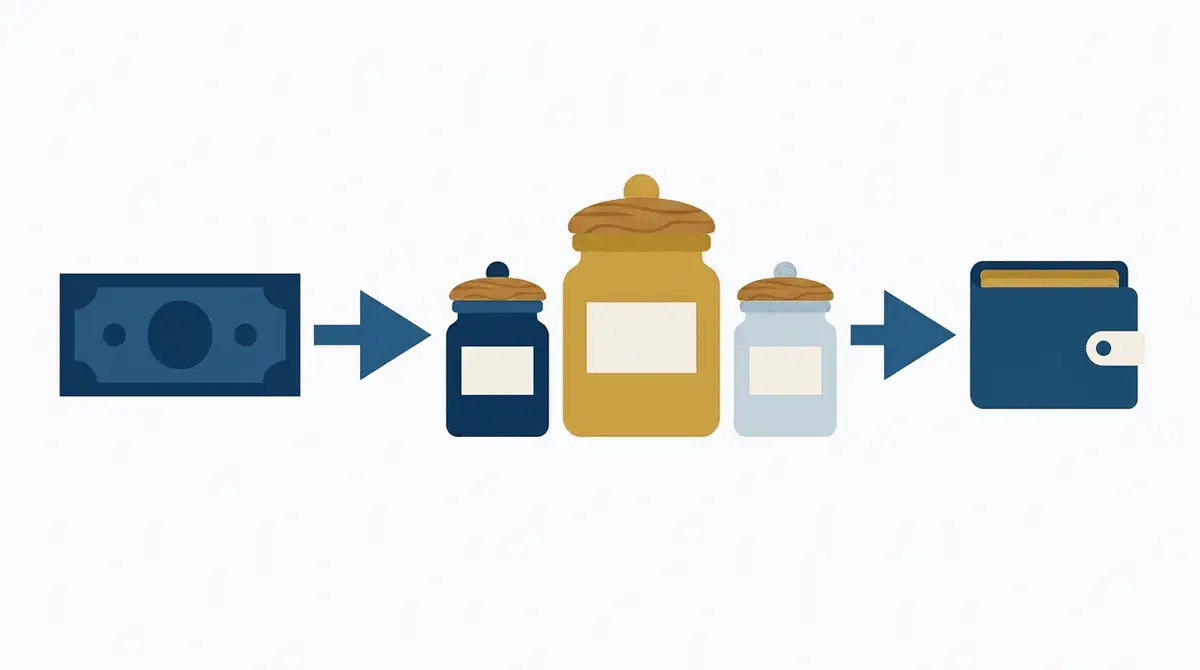
When you’re an employee, a fixed number lands in your account on payday. You know exactly what you have to work with, and everything else (taxes, social security) has already been taken out without you having to think about it. When you go freelance, that fixed number disappears. A client pays you 1,200 and, if you’re not careful, that 1,200 “feels like yours” the same day it lands in your account. It isn’t. Part of it has to go back out in taxes, another part covers business costs, and only what’s left after that is, genuinely, your salary.

freelancers freelancer salary taxes organization
Freelancers

What's new in Cuéntamo: net worth, advanced forecasting, investments and income tax

June 24, 2026

An accounting app isn’t a social network: if things are going well, you don’t need to open it every day. But over the last few months Cuéntamo has changed enough to deserve a proper look. And almost everything new has something in common: it solves something you used to do by hand, in a spreadsheet, or by checking four different places.

More than a list of features, this is a tour of what problem each new thing solves. By section.

product updates net worth forecasting investing freelancers
Freelancers

A Year Without a Gestoría: What You Learn Doing Your Own Bookkeeping as a Freelancer

May 30, 2026

Last June, a freelancer we know told his gestoría (a tax/accounting firm) he wasn’t renewing. He’d spent four years paying 150 euros a month for a service that consisted of: he sent them the invoices, they filed his returns, and if he asked something they answered in 48 hours in a language that needed translation.

Eighteen hundred euros a year. For the IVA and the IRPF of each quarter, the annual IVA summary and the income tax return. It’s not that they did it badly: it’s that, for his case (a fiscally very simple activity), he felt he could handle it himself.

freelancers gestoría bookkeeping modelo 303 modelo 130 record books
Freelancers

I Bill 40,000 Euros a Year as a Freelancer: This Is What I Actually Keep

May 28, 2026

Note: the “I” in the title is an example, not a real person. This article works through a hypothetical case —a typical freelancer billing 40,000 euros (net of VAT) a year— so you can follow the numbers step by step using the official contribution and tax figures in force.

When someone asks how much you earn as an autónomo (a self-employed worker / freelancer) and you say “I bill forty thousand a year”, the next question should be: “yeah, but how much do you actually keep”. Because between billing forty thousand and having forty thousand in your pocket there’s a chasm that only those who live it understand.

freelancers taxes IRPF IVA freelancer fee net income
Freelancers

Couple finances: one freelancer, one salaried employee

May 24, 2026

She gets paid on the 28th of every month. Always the same amount, give or take. He invoices when he gets paid, which is sometimes the 5th, sometimes the 20th, and sometimes not even that month. She knows exactly how much she’ll earn in July. He has no idea how much will come in over the next three weeks.

If this sounds familiar, you’re not alone. It’s one of the most common household setups, and if you don’t design a financial system that absorbs that asymmetry, the asymmetry turns into arguments.

personal finance couple freelancers budgeting irregular income
Freelancers

Your first quarter as an autónomo: a fiscal survival guide

May 18, 2026

Nobody explains this to you when you register as an autónomo (self-employed worker). They tell you to fill in form 036, to sign up for the RETA (the self-employed Social Security scheme), to take advantage of the tarifa plana (the flat-rate Social Security contribution for new freelancers) if you can, and little else. Three months later your first quarterly return arrives and the question is always the same: “And now, what exactly do I do?”.

freelancers new freelancer first quarter taxes modelo 303 modelo 130
Freelancers

VAT to offset from previous quarters: what it is and how it works

May 16, 2026

When an autónomo (self-employed worker) files the modelo 303 (the quarterly VAT return), the result of the settlement can be positive or negative. If it’s positive, you pay it to the Spanish Tax Agency (Agencia Tributaria). But if it’s negative –you’ve paid more VAT than you’ve collected– that balance doesn’t disappear: it’s carried forward to the next quarter to offset it. And if you reach the end of the year with an accumulated negative balance, you can ask for it to be refunded.

freelancers VAT modelo 303 offset refund quarterly
Freelancers

Modelo 303 with no activity: how to file it when you haven't invoiced

May 14, 2026

There are quarters when not a single invoice comes in. A bad month that drags on, a lull between projects, the start of an activity where you still haven’t closed your first client. And when the day comes to file your modelo 303 (the quarterly VAT return), the question is unavoidable: if I haven’t invoiced anything, do I still have to file it?

The short answer: yes. As long as you’re registered in the census of economic activities (modelo 036 or 037), the obligation to file the modelo 303 exists every quarter, with or without income.

freelancers VAT modelo 303 no activity Hacienda
Freelancers

Personal finances and freelance work in the same bank account: the mistake that costs you money and time

April 4, 2026

When someone starts freelancing for the first time, there’s a decision almost nobody makes consciously: whether to open a separate bank account for business, or just use the one they already have.

Most people go with the second option. It’s the easiest thing to do. Just to get started, to try things out, to keep it simple. And for the first few months, it works well enough.

The problem comes later. When it’s time to file your quarterly taxes, when your accountant asks for invoices, when you try to figure out how much money you’re actually making as a freelancer. That’s when having everything mixed together turns into a financial archaeology project nobody enjoys.

freelancers bank accounts bookkeeping organization