Hacienda

Hacienda

Modelo 111 and Modelo 190: When You Have to File the Withholdings You Make

October 16, 2026

Whether you know about withholding depends a lot on who you invoice. If you’re a professional and your clients are Spanish companies or autónomos (self-employed workers), you see it on every invoice: the client deducts 15% of IRPF (personal income tax) and pays it in to Hacienda in your name. If you invoice clients abroad or private individuals, or your activity is a business one (a shop, a workshop), you can spend years as an autónomo without ever seeing a withholding.

self-employed modelo 111 modelo 190 withholding IRPF Hacienda annual summary
Hacienda

Mandatory e-invoicing for freelancers in Spain: the deadline is now official (October 2028)

October 12, 2026

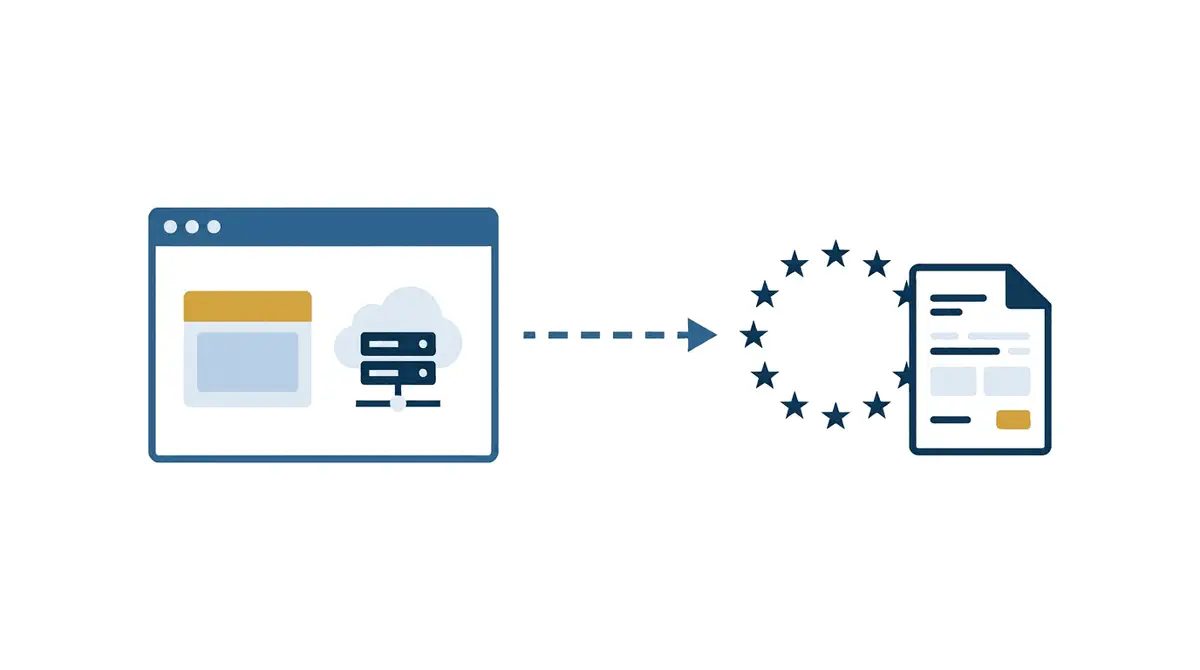
You have been issuing invoices as PDFs and sending them by email for years. Your client receives them, archives them, and that is that. The system works. And it is about to change: before 6 October 2028, if you invoice other businesses or professionals in Spain, you will have to do it in structured electronic format.

The uncertainty about the when had lasted four years, ever since Law 18/2022 established the obligation in principle. On 5 October 2026, Order HAC/1028/2026 was published in the Official State Gazette (Boletín Oficial del Estado, BOE), and the clock started: when it came into force on the following day, it triggered the adaptation deadlines.1 No more open windows or “pending regulatory development”: there are now dates.

freelancers e-invoice electronic invoicing Hacienda SMEs B2B Spain 2028
Hacienda

Invoicing a client in the United States (or outside the EU): neither «exempt» nor «no VAT, end of story»

October 9, 2026

You have a client in the United States, Canada or the UK and it’s time to issue the invoice. The usual doubt arrives: do I charge VAT? And the second one, the one that ends badly: what do I write where the VAT would go? Two categorical answers circulate in forums, and both are wrong. One says the transaction is «exempt». The other says that outside the EU «no VAT applies, ever».

self-employed VAT invoicing foreign clients not subject to VAT export of services Hacienda
Hacienda

The VAT you paid on business expenses in the EU — Spain can get it back for you, but only until September 30

September 23, 2026

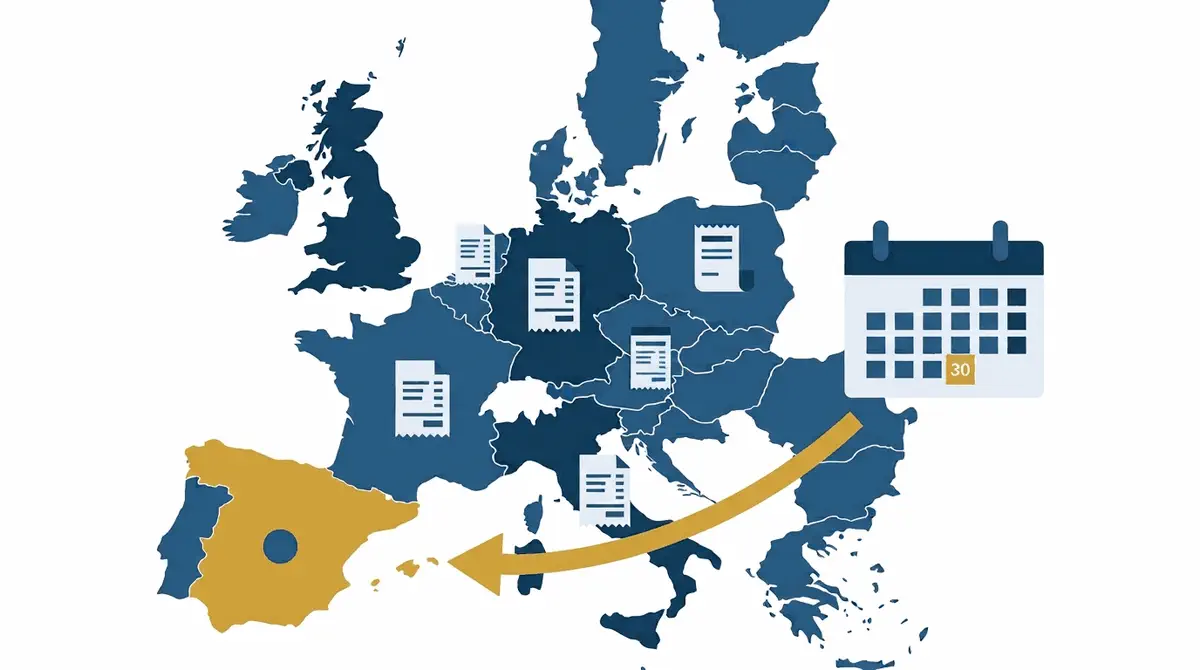
Say you went to a trade fair in Germany last year. You paid for the hotel, the food, the fuel on the way there, and the entry fee — all with invoices you kept. Hidden inside those invoices is German VAT (Mehrwertsteuer, their equivalent of IVA) that you are legally entitled to claim back. But there is a deadline to do it, and it falls on September 30.

The same applies to the conference in Paris, the client visit in Lisbon, the accommodation in Milan, or the Italian motorway tolls. If you are self-employed and you had business expenses in EU countries last year, there is a refund you may be owed — and most people who qualify never ask for it.

self-employed VAT modelo 360 business expenses EU VAT refund Hacienda
Hacienda

Modelo 349: Spain's EU Operations Return, and Why Buying Google or Meta Ads Counts

September 7, 2026

You run a Google Ads campaign, place a few Meta ads, or rent a server on AWS. These are such routine expenses that you barely think about them: the charge lands, you log it, and you move on. What you probably don’t know is that, the moment you pay that invoice, you’ve just carried out an “intra-community operation” under Spanish VAT law. And that brings two formal obligations almost no digital autónomo (self-employed worker) has ever heard of: registering in a census called the ROI, and periodically filing a form called modelo 349.

self-employed VAT modelo 349 intra-community operations ROI taxes Hacienda
Hacienda

Modelo 390: What Spain's Annual VAT Summary Is and How It Ties to Your Quarterly Returns

August 28, 2026

Four quarterly modelo 303 returns, four payments to the Agencia Tributaria, and then at the end of the tax year comes one more declaration: the modelo 390. For many autónomos (self-employed workers) this is the one that generates the most questions — not because it’s complicated, but because it’s not clear what it’s actually for if you’ve already filed all four 303s for the year.

The short answer: the 390 is not a new tax payment. It’s the year-end close. The document that says “here’s everything I charged, everything I paid, and everything I’ve settled with the tax authority over the year, added up”. It’s also your last chance to spot anything in the quarterly returns that doesn’t add up.

self-employed VAT modelo 390 taxes Hacienda annual summary
Hacienda

Modelo 303 with no activity: how to file it when you haven't invoiced

May 14, 2026

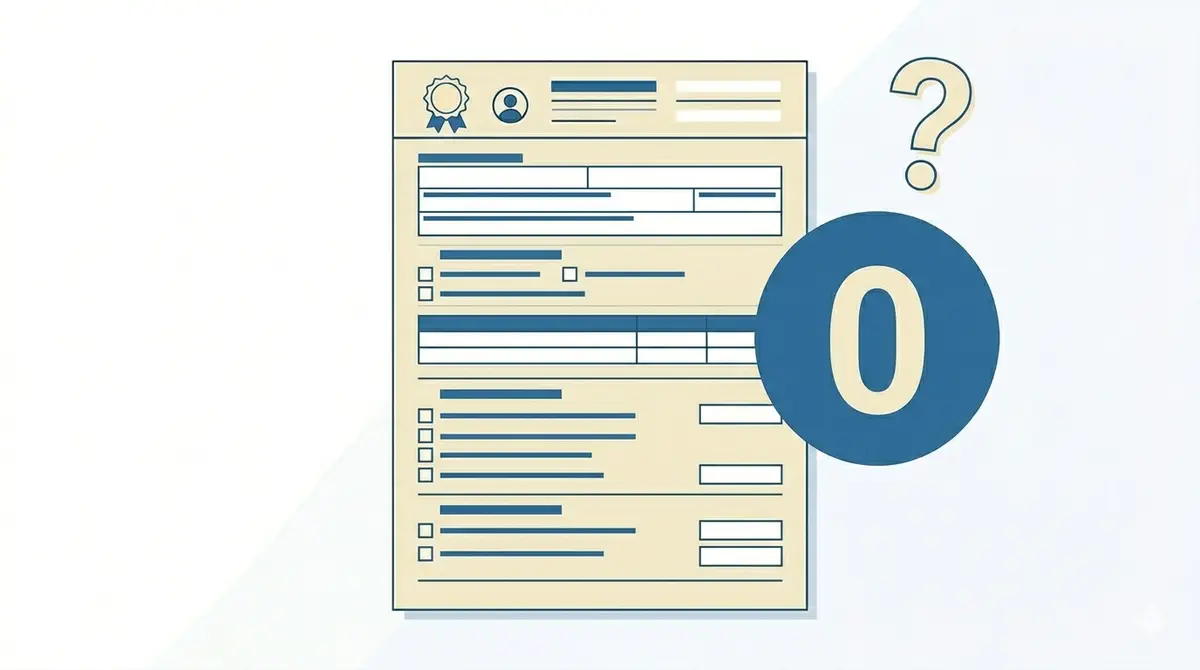
There are quarters when not a single invoice comes in. A bad month that drags on, a lull between projects, the start of an activity where you still haven’t closed your first client. And when the day comes to file your modelo 303 (the quarterly VAT return), the question is unavoidable: if I haven’t invoiced anything, do I still have to file it?

The short answer: yes. As long as you’re registered in the census of economic activities (modelo 036 or 037), the obligation to file the modelo 303 exists every quarter, with or without income.

freelancers VAT modelo 303 no activity Hacienda
Hacienda

The autónomo tax calendar 2026: every deadline and every model

May 12, 2026

If you’re an autónomo (self-employed worker), the tax calendar isn’t something you can leave for “whenever I remember”. Every quarter you have obligations with the Spanish Tax Agency (Agencia Tributaria), and the deadlines are firm. Missing a date, even by a single day, means surcharges and late-payment interest that are perfectly avoidable if you have the dates clear.

This article is a quick-reference cheat sheet. Save it to your favourites and check it every time the quarter close approaches.

self-employed tax calendar deadlines modelo 303 modelo 130 Hacienda 2026
Hacienda

What happens if you file your quarterly taxes late

May 10, 2026

You’ve missed the deadline. The 20th came and went, and you didn’t file the modelo 303 (the quarterly VAT return) or the 130 (the quarterly IRPF instalment). Or maybe it was 30 January and the fourth quarter went unfiled. First of all: it’s not the end of the world. Second: every day you let pass without filing it, the situation gets a little worse. So let’s look at the consequences and what you can do right now to minimise the damage.

self-employed taxes modelo 303 modelo 130 fines Hacienda deadlines
Hacienda

Modelo 303: what it is, who files it, and how to fill it in step by step

May 8, 2026

The modelo 303 is the quarterly VAT self-assessment that every autónomo (self-employed worker) with VAT-liable activity has to file, and out of its sixty-plus boxes, most of them will never affect you. The real worry usually isn’t “what is it”, but what happens if you get something wrong: a wrong box is fixed with a supplementary return, and the sooner you file it, the less it costs — see what happens if you file late. And if the result comes out negative, that balance isn’t lost: it carries over to the next quarter, as we cover in VAT to offset from previous quarters.

self-employed VAT modelo 303 taxes quarterly Hacienda