
Housing

Housing

How Much It Costs to Move Out in Spain: What You Pay Day One and What You Pay Every Month

October 13, 2026

You search for how much it costs to move out and find ranges that don’t match each other: one blog says 900 euros a month is fine, another talks about 1,800, a forum thread tells its own particular story as if it were the rule. None of the figures quite fits, because they’re actually mixing up two different questions.

One is how much you need saved before you sign: the deposit, the first month, connecting the utilities, the bare minimum of furniture if the flat is empty. The other is how much it’ll cost you every month from then on: rent, utilities, food, transport, insurance. Two questions, two answers, and hardly anyone separates them. Here are both, one at a time, with the numbers of Irene, who is moving into a flat on her own for €850 a month. (Irene is made up; the numbers are round so you can follow the maths. Yours depend on your city and your flat.)
personal finance renting housing budgeting moving out
Housing

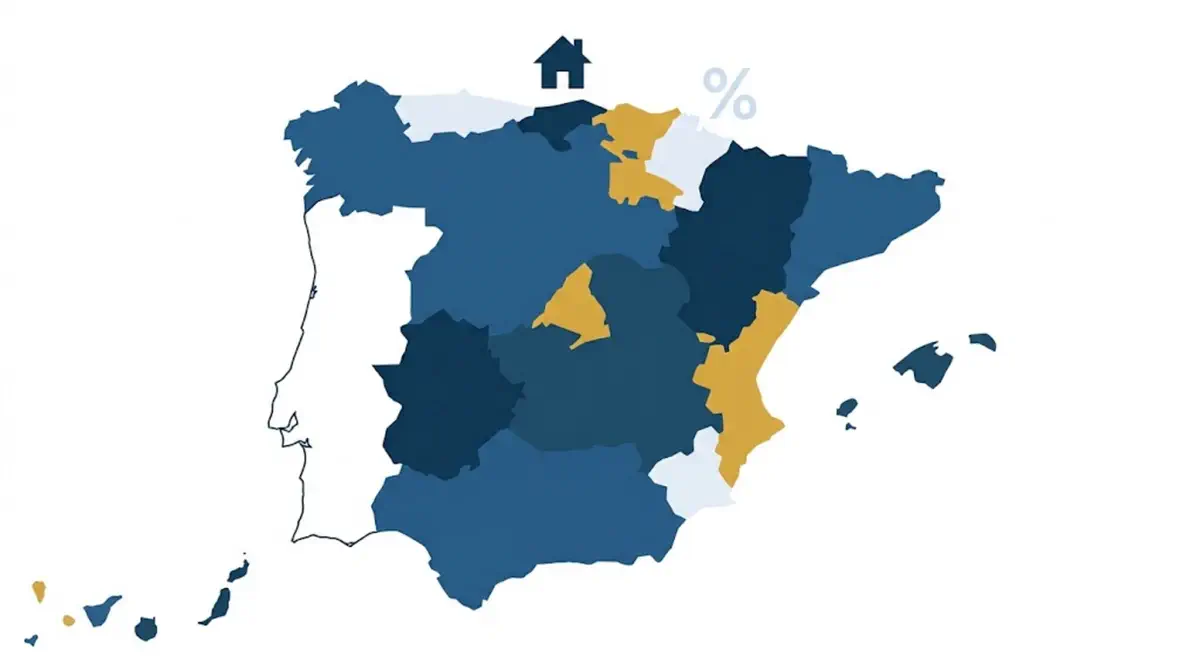
The reduced property transfer tax rate in Spain: what they actually ask for in return

September 29, 2026

You sign with the reduced rate because you’re under a certain age, or because it’s your first home, and you breathe out: a few points less on the transfer tax (ITP) is thousands of euros. Then someone tells you to register at your town hall as soon as possible, and elsewhere you read you have up to twelve months to actually live there, and you’re not sure whether registering already locks you in, or whether waiting leaves you without the proof you’ll need. It’s the doubt that comes up most often in mortgage forums, and it’s rarely answered well, because it actually mixes up two different questions.

housing buying a home property transfer tax primary residence taxes personal finance
Housing

Fixed rate vs variable rate mortgage: what the spread is and how much your payment moves with the Euribor

July 9, 2026

Choosing between a fixed and variable mortgage is one of the most important financial decisions most people make. Not because it is technically complicated, but because the consequences extend over decades and the interest rate environment changes constantly throughout that time.

The good news is that there is no universally correct answer. There is, however, a way of thinking through the decision that lets anyone make it with confidence, without needing to be an economist.

mortgage Euribor personal finance housing interest rates