Investing

Investing

Spain's Two-Month Rule: You Sold at a Loss and Bought Back. Can You Deduct It?

October 2, 2026

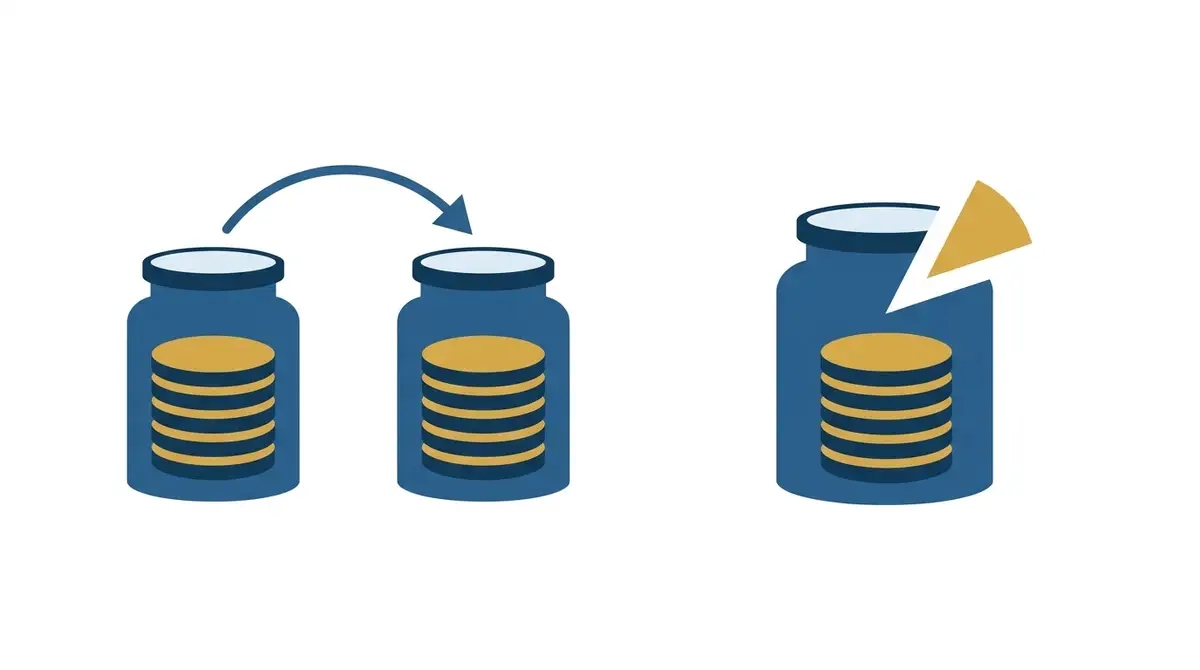
You sell some shares at a loss to offset gains elsewhere, and a week later (because you still believe in the company, or because of an automatic order) you buy again. It is one of the most common situations in any portfolio, and the question that comes with it is rarely «what does the rule say?» but «does it apply to what I hold?»

The short answer: it depends on what you sold, where it is listed and what you bought back. And one starting idea worth keeping: the rule does not take the loss away from you. It stops you from deducting it now; you get it back later. That is why this article is organised by what you hold, not by the order of the legal text.
IRPF investing capital losses two-month rule homogeneous securities taxes stock market
Investing

Modelo 720: Your Broker Gave You a Spanish IBAN, But Your ETFs Can Still Require Reporting

September 21, 2026

Your broker sends a notice: “we’ve migrated your account to a Spanish IBAN.” And a rumor spreads, especially in investing forums, that this exempts you from Spain’s modelo 720 foreign-asset reporting form. For the cash account, that’s true. For the ETFs or funds sitting in the same broker’s custody account, it almost never is, and they’re two separate obligations governed by two separate rules.

Mixing the two is the mistake that’s spreading fastest right now among people investing through brokers like Trade Republic, DeGiro or similar, many of which have recently moved their clients’ cash accounts from a German or Dutch IBAN to a Spanish one, while the securities (custody) account stays exactly where it was.

modelo 720 investing ETF foreign broker Agencia Tributaria taxes
Investing

Index Fund or ETF: Why the Fund Usually Wins in Spain (and the Condition Almost Nobody Checks)

September 8, 2026

If you’ve read anything about passive investing, you’ve probably come across this idea: an index fund and an ETF tracking the same index are, in practice, the same product with a different wrapper. Similar fees, same diversification, same “don’t try to beat the market” philosophy. And up to that point, it’s true.

What almost nobody spells out with the same detail is that, in Spain, they’re not taxed the same at all. One lets you move your money from one place to another without paying tax along the way. The other doesn’t. And the advantage of the first one is only real if a very specific condition is met, one that most people don’t even know exists, let alone check.

index funds ETF taxation investing IRPF fund transfers
Investing

Pay Down Your Mortgage or Invest €10,000? The Real Math, Step by Step

August 10, 2026

You get €10,000 out of nowhere. A big bonus, a small inheritance, a severance payment, savings that have finally added up. And the usual dilemma shows up: do you use it to pay down the mortgage, or do you invest it?

The answer you’ll find almost everywhere is “it depends.” True, but not very useful. Let’s do the real math with numbers, so you know exactly what you’re comparing and which part of the decision isn’t math at all, but how well you sleep at night.

mortgage investing personal finance savings debt
Investing

What's new in Cuéntamo: net worth, advanced forecasting, investments and income tax

June 24, 2026

An accounting app isn’t a social network: if things are going well, you don’t need to open it every day. But over the last few months Cuéntamo has changed enough to deserve a proper look. And almost everything new has something in common: it solves something you used to do by hand, in a spreadsheet, or by checking four different places.

More than a list of features, this is a tour of what problem each new thing solves. By section.

product updates net worth forecasting investing freelancers
Investing

How your investments are taxed in Spain: a practical IRPF guide

May 6, 2026

One of the questions that comes up most when someone starts investing is: and how do I declare this? The short answer is that the Spanish Tax Agency (Agencia Tributaria) wants its share of what you earn by investing. The long answer is that the system has its nuances, and knowing them can save you quite a bit of money.

This article explains in a practical way how the main investment products are taxed in Spain, without beating around the bush and without claiming to replace a tax adviser.

investing IRPF taxation investment funds capital gains savings
Investing

How to Start Investing from Scratch (Even If You Know Nothing About the Stock Market)

May 3, 2026

Investing feels a little daunting at first. Some people put it off for years because it seems too complicated, too risky, or too much of a “rich person’s game”. Meanwhile, their money has been quietly losing purchasing power sitting in a current account.

This article is for that person. No unnecessary jargon, no promises of magical returns, and no hidden sales pitch.


Why invest if I already have savings?

Because money sitting idle in a current account loses value over time. If inflation runs at 3% a year and your savings earn nothing, in ten years your purchasing power will have dropped significantly, even though the number in your account stays the same.

investing index funds deposits bonds savings