Self-Employed

Self-Employed

Modelo 390: What Spain's Annual VAT Summary Is and How It Ties to Your Quarterly Returns

August 28, 2026

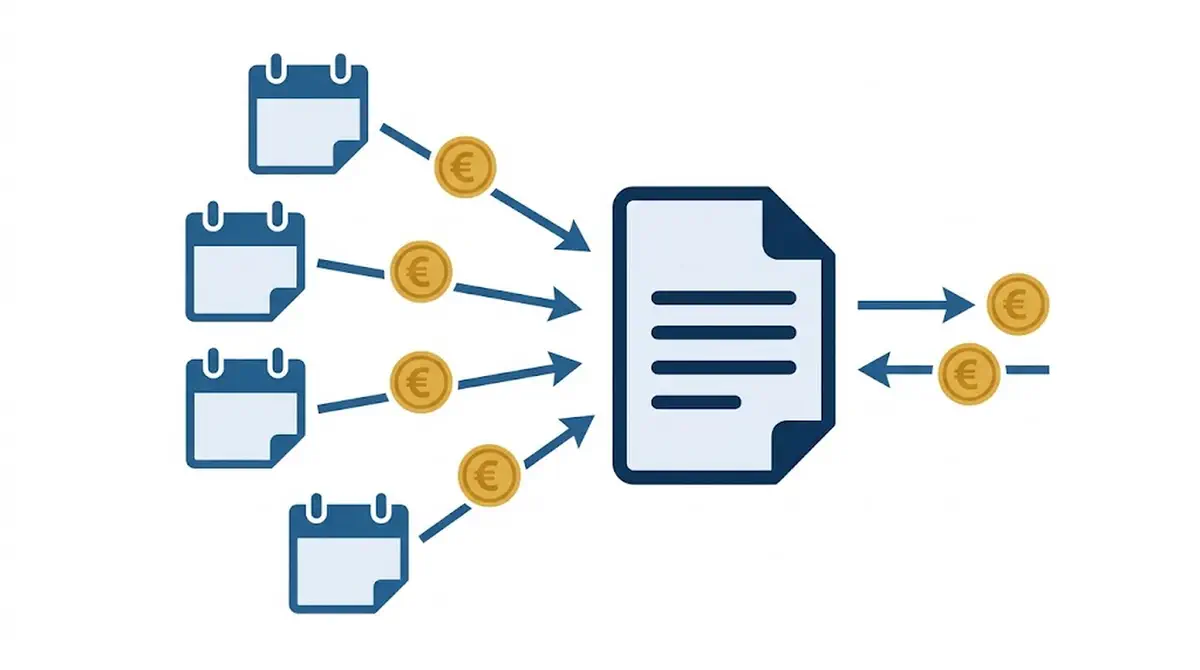
Four quarterly modelo 303 returns, four payments to the Agencia Tributaria, and then at the end of the tax year comes one more declaration: the modelo 390. For many autónomos (self-employed workers) this is the one that generates the most questions — not because it’s complicated, but because it’s not clear what it’s actually for if you’ve already filed all four 303s for the year.

The short answer: the 390 is not a new tax payment. It’s the year-end close. The document that says “here’s everything I charged, everything I paid, and everything I’ve settled with the tax authority over the year, added up”. It’s also your last chance to spot anything in the quarterly returns that doesn’t add up.

self-employed VAT modelo 390 taxes Hacienda annual summary
Self-Employed

A till receipt is not an invoice: when you can deduct it and when you can't

August 24, 2026

You have lunch with a client, pay 48 euros and tuck the receipt into your wallet with a sense of duty done. Three months later, doing your quarterly return, that crumpled piece of paper is worth rather less than you thought: you can deduct the expense, but not the VAT. And not because the receipt is faulty, but because it’s missing one line you can only ask for at the moment you pay.

simplified invoice deductible expenses VAT income tax self-employed
Self-Employed

How to maximise your self-employed pension: contribute the maximum, or invest the difference?

July 2, 2026

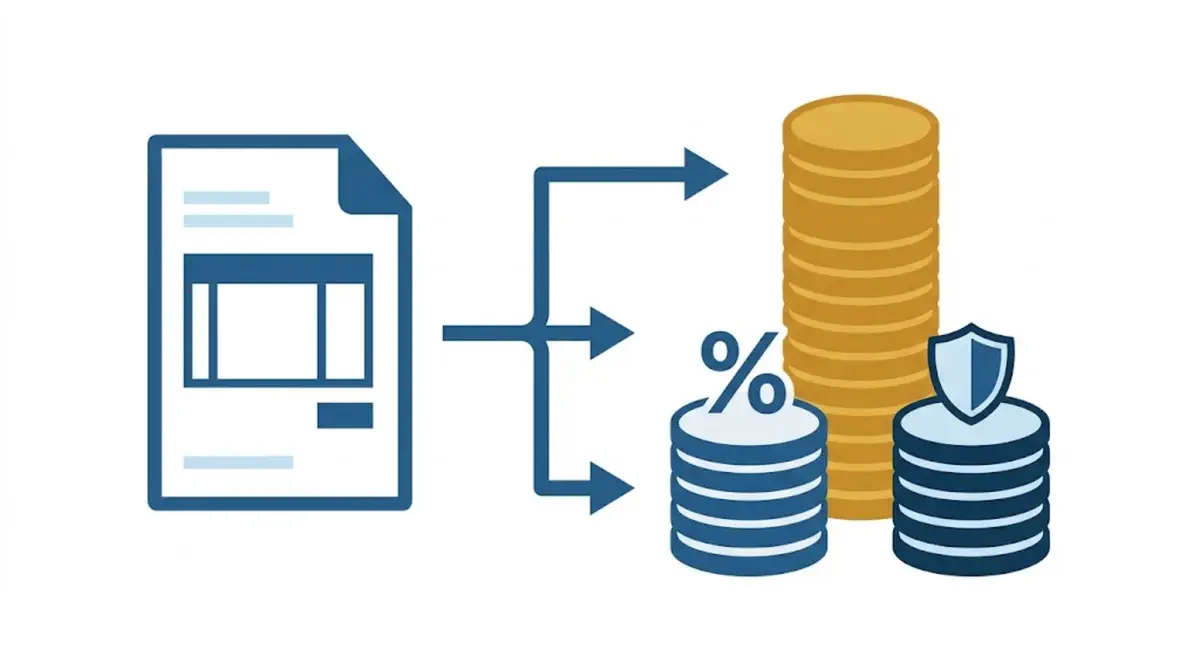
As an autónomo (self-employed worker) you get to choose (within limits) how much you contribute each month. And that raises a question almost nobody answers with real numbers: is it better to push hard and contribute on a high base from now to collect a bigger pension, or to contribute the minimum, invest what I save, and raise my base only at the end?

This isn’t a matter of faith. It depends on how the pension is calculated, and once you understand that mechanism you discover something that changes the whole strategy: most of your contributing life doesn’t count towards the amount of your pension. Let’s see why, and at the end we’ll show you a free calculator to test it with your own figures.

self-employed pension retirement contributions regulatory base index fund
Self-Employed

Self-employed contribution by real income: how it's calculated and what to pay each month

June 29, 2026

If you’re self-employed in Spain, your Social Security contribution is one of the most significant fixed costs of your activity. What you might not fully understand is how it’s calculated: why it can change from one year to the next, what it has to do with your invoicing, and why an unexpected adjustment letter sometimes arrives.

The answer lies in the contribution system based on real income, which links your monthly contribution to what you actually earn as a self-employed worker — not a freely chosen base. Understanding how it works is the key to paying the right amount every month and avoiding surprises at the end of the year.

self-employed self-employed contribution real income Social Security net earnings
Self-Employed

From 80 to 400 euros a month: how to prepare your finances for when the tarifa plana ends

May 26, 2026

When you registered as an autónomo (self-employed worker), the tarifa plana (the reduced flat-rate Social Security contribution for new freelancers) was probably the best news in the whole process. Eighty euros a month for your Social Security contribution. Nothing. A huge relief in the first few months, when income is still on its way and every euro counts.

The problem is what comes afterwards. Because the tarifa plana ends. And when it ends, it doesn’t go up a little: it multiplies by four or five all at once. And it coincides precisely with the moment when many autónomos start to have real income, so the blow gets mixed up with the first sizeable quarterly IVA (VAT) and IRPF (personal income tax) payments.

self-employed flat rate self-employed contribution cash flow planning
Self-Employed

I've received the contribution adjustment letter: what do I do now

May 22, 2026

If you’re an autónomo (self-employed worker) and you’ve received a letter from the Tesorería General de la Seguridad Social (the Spanish Social Security treasury) with an amount you weren’t expecting, take a breath. You’re not alone and it’s not a fine. It’s the contribution adjustment (regularización de cuotas), a new process that affects all self-employed workers since the system of contribution by real income came into force.

This guide explains what that letter means, how the difference they’re claiming from you (or that they owe you) is calculated, and above all how to stop it catching you off guard again next year.

self-employed self-employed contribution adjustment Social Security contribution by real income
Self-Employed

Depreciation for autónomos: what it is, the official tables and worked examples

May 20, 2026

You’ve just bought a 2,000-euro laptop for your work as an autónomo (self-employed worker). You have the invoice, the IVA (VAT) is clear, and you assume you’ll deduct the whole thing this year like any other expense. But no: that laptop is a capital asset, and for tax purposes it doesn’t work like that.

What you have to do is depreciate it. Spread its cost over several years, following the tables published by the Spanish Tax Agency (Agencia Tributaria). The concept isn’t complicated, but it has its nuances. Let’s break them down.

self-employed depreciation capital assets deductible expenses IRPF VAT
Self-Employed

The autónomo tax calendar 2026: every deadline and every model

May 12, 2026

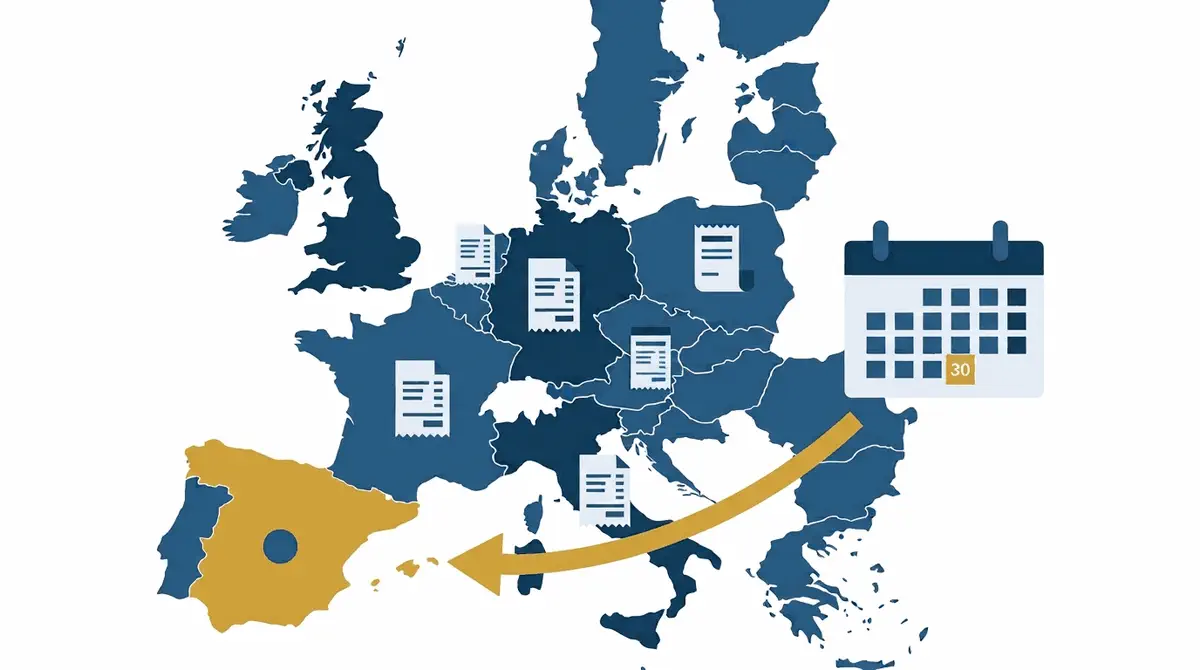
If you’re an autónomo (self-employed worker), the tax calendar isn’t something you can leave for “whenever I remember”. Every quarter you have obligations with the Spanish Tax Agency (Agencia Tributaria), and the deadlines are firm. Missing a date, even by a single day, means surcharges and late-payment interest that are perfectly avoidable if you have the dates clear.

This article is a quick-reference cheat sheet. Save it to your favourites and check it every time the quarter close approaches.

self-employed tax calendar deadlines modelo 303 modelo 130 Hacienda 2026
Self-Employed

What happens if you file your quarterly taxes late

May 10, 2026

You’ve missed the deadline. The 20th came and went, and you didn’t file the modelo 303 (the quarterly VAT return) or the 130 (the quarterly IRPF instalment). Or maybe it was 30 January and the fourth quarter went unfiled. First of all: it’s not the end of the world. Second: every day you let pass without filing it, the situation gets a little worse. So let’s look at the consequences and what you can do right now to minimise the damage.

self-employed taxes modelo 303 modelo 130 fines Hacienda deadlines
Self-Employed

How to fill in the modelo 303 step by step (a practical guide for autónomos)

May 8, 2026

The modelo 303 is the form that every autónomo (self-employed worker) files each quarter to declare VAT (IVA). If you already know how quarterly VAT is calculated, filling it in is just a matter of knowing which figure goes in each box. And out of the sixty-plus boxes the form has, most of them don’t affect you.

This guide goes box by box, with a real example, so you can sit down in front of the Spanish Tax Agency (Agencia Tributaria) form and complete it without hesitation.

self-employed VAT modelo 303 taxes quarterly Hacienda